Last updated November 20, 2026
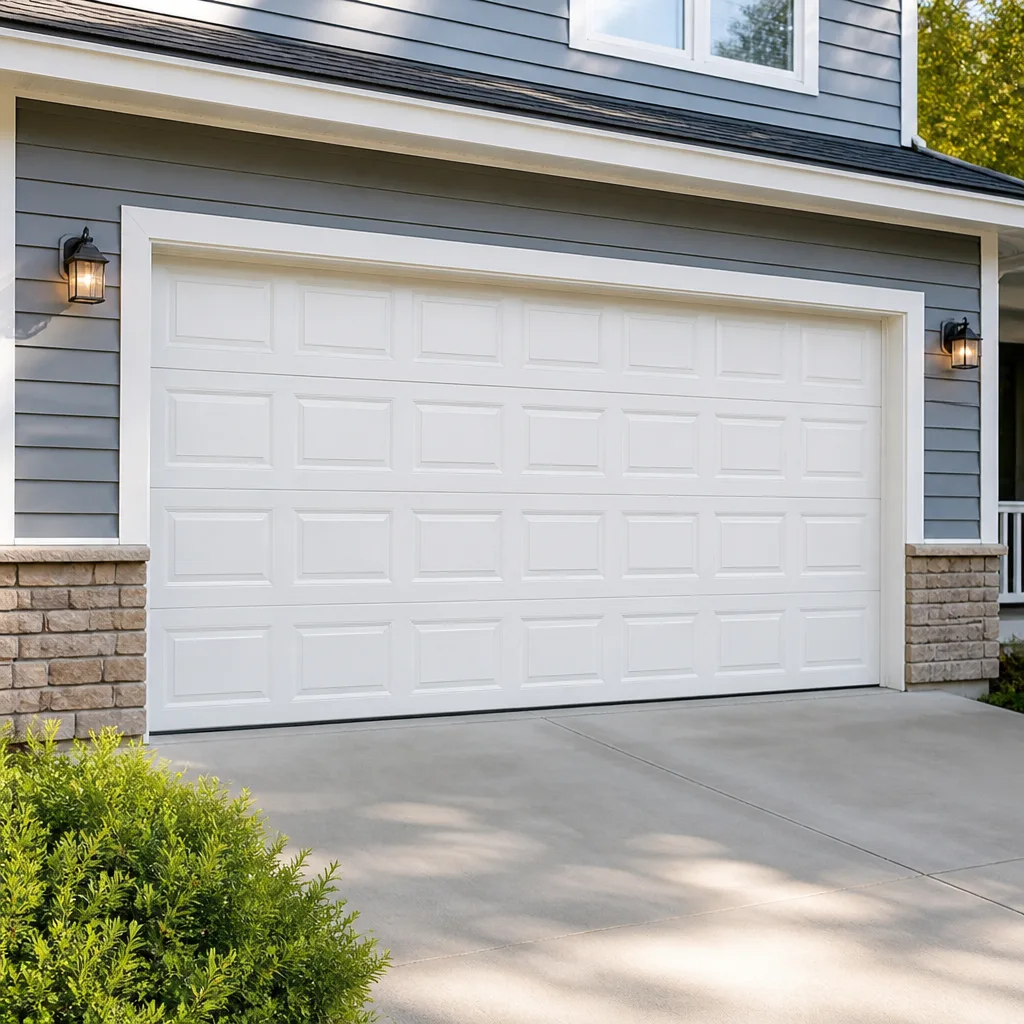 Raised-panel steel
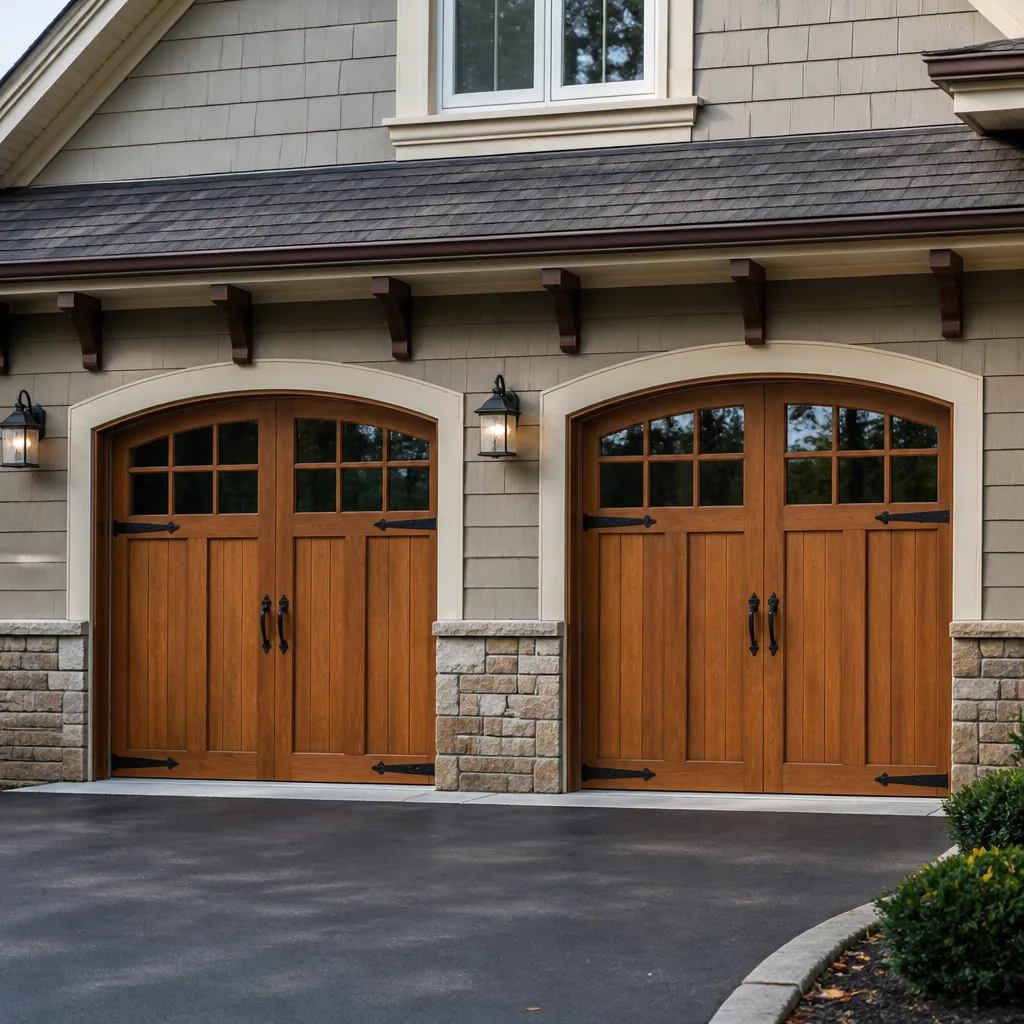 Carriage house
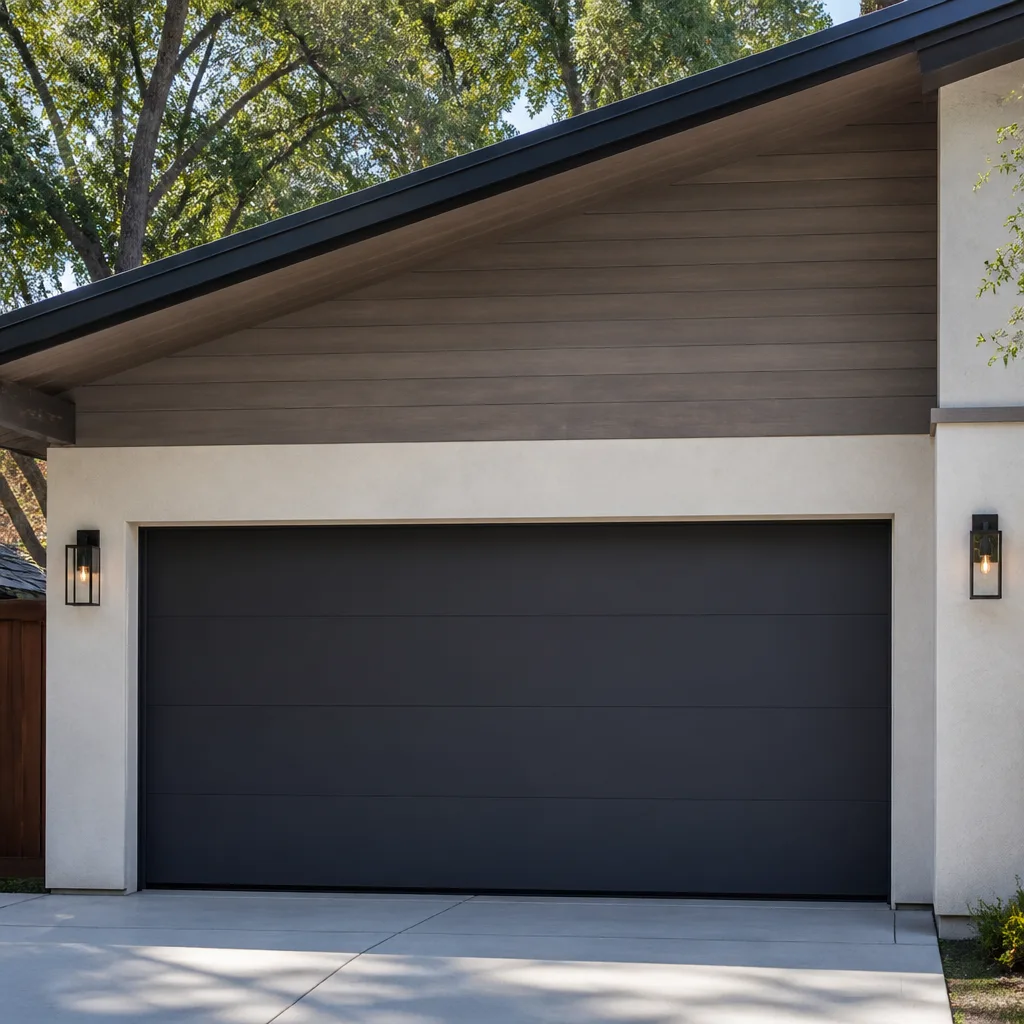 Modern flush
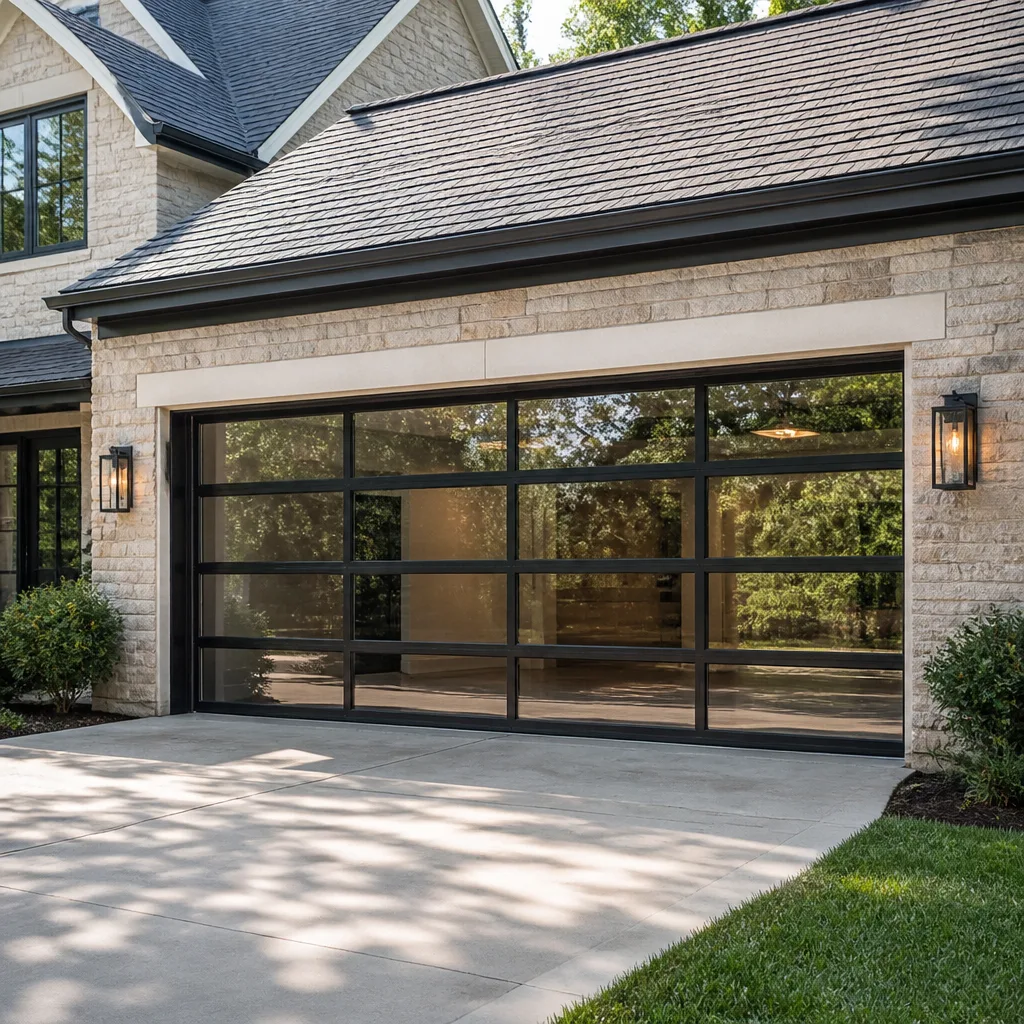 Full-view glass
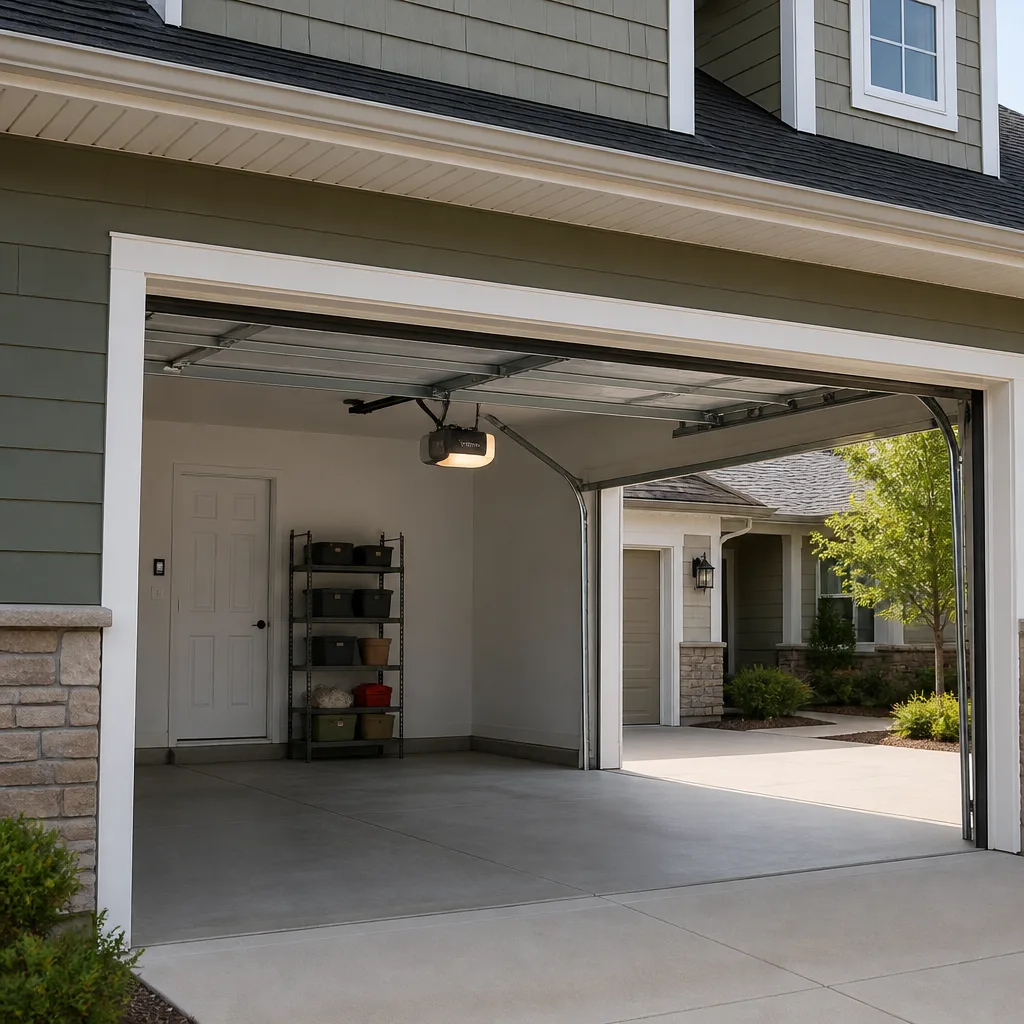 LiftMaster openers
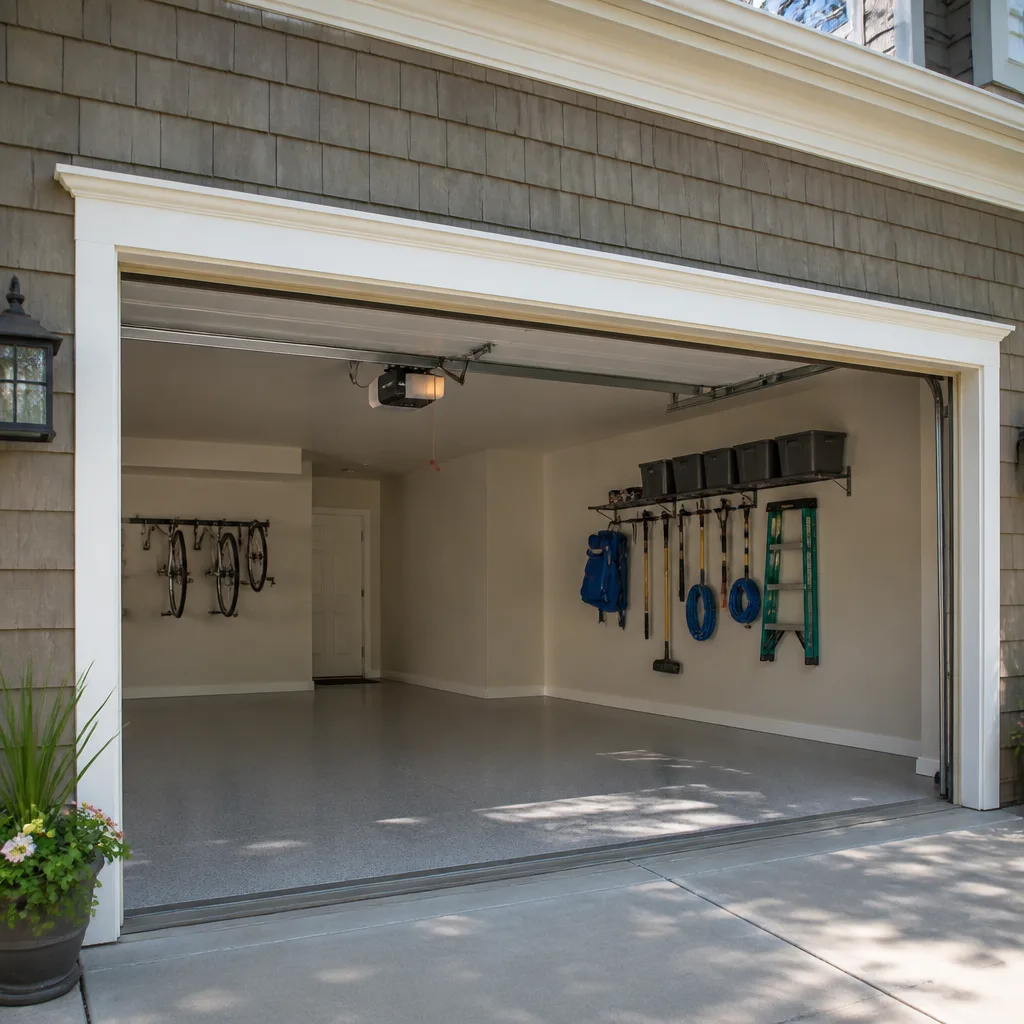 Chamberlain openers
Full 25-point door and opener safety check with every visit - springs, cables, rollers, tracks, and your LiftMaster or Chamberlain opener included
You get a price before we start. It does not change when the pro arrives.
Get your free estimateThe Complete Guide to Garage Doors in Westgate
A garage door looks like one big object. It isn’t. Behind the panels sits a system of springs, cables, drums, tracks, rollers, hinges, an opener, safety sensors, and a weatherseal, each doing a specific job and each loading the others. When one part starts to fail, the strain spreads. A tired spring forces the opener to work harder, the opener overheats, the door drops unevenly, and a roller or cable takes the punishment next. That chain reaction is why two homeowners with a “broken door” can face wildly different outcomes: one a quick repair, the other a replacement. This guide maps the whole system the way we see it across Westgate homes, from the postwar blocks to the 1970s and 1990s subdivisions, so you can tell what you’re actually looking at before anyone quotes you.
Quick Answer
A garage door is an eight-part mechanical system, not a single unit, and most failures start with the springs and cables before spreading to the opener, tracks, and rollers. In Westgate, the freeze-thaw cycle each winter works torsion springs and shrinks bottom seals, so annual inspection of those two parts prevents most surprise breakdowns. Understanding how the parts interact is what separates an inexpensive repair from a full replacement, and it’s what this guide walks you through.
Styles & brands we work with
- Raised-panel steel
- Carriage house
- Modern flush
- Full-view glass
- LiftMaster openers
- Chamberlain openers
Table of Contents
- The Eight Components of a Garage Door System
- Westgate’s Housing Stock and What It Means for Your Door
- How Ohio’s Freeze-Thaw Cycle Wears Down Your Door
- The Brands You’ll Find in Westgate Garages
- Repair or Replace: The Decision Framework
- What Moves the Cost of a Garage Door Job
- A Year-Round Maintenance Routine for Westgate Homeowners
- Common Mistakes to Avoid
The Eight Components of a Garage Door System
Every sectional garage door, regardless of brand or age, relies on the same eight-part system. Learning what each piece does, and how one failing part stresses the next, is the fastest way to understand a repair quote. Here’s the breakdown.
- Springs. Torsion or extension springs counterbalance the door’s weight so a person or an opener can lift it with little effort. They carry enormous stored tension and are the most dangerous part of the system to touch. When they weaken or snap, everything else compensates.
- Cables. Steel cables run from the bottom brackets up to the drums and hold the door’s weight in tension with the springs. A cable that frays or jumps its drum lets the door drop or hang crooked, and a snapped cable can whip with real force.
- Tracks. The vertical and horizontal rails guide the door as it travels. Bent or misaligned tracks make the door bind, which overloads the opener and chews through rollers.
- Rollers. The wheels that ride inside the tracks. Steel rollers wear and get noisy; nylon rollers run quieter but can flat-spot. Worn rollers drag the door and strain the opener motor.
- Hinges. The joints that let the panels flex as the door curves into the horizontal track. Worn hinges let panels sag and throw the door out of alignment.
- The opener. The motor, drive system (belt, chain, or screw), and electronics that raise and lower the door. It’s designed to lift a balanced door, not a heavy one, so a struggling opener is often a symptom of a spring problem, not an opener problem.
- Safety sensors. The paired photo-eye sensors near the floor that reverse the door if something crosses the beam. Misaligned or dirty sensors are one of the most common reasons a door won’t close.
- Weatherseal and panels. The bottom seal and perimeter trim keep out water, drafts, and pests. The panels are the visible face and the structural shell. A cracked or waterlogged seal lets moisture in; a dented panel can bind the door in its tracks.
The takeaway: a repair that fixes only the part that broke, without checking what stressed it, tends to come back. Our technicians have up to 9 years of experience diagnosing these interactions brand by brand, which is why we always look at the whole door rather than the one symptom.
Westgate’s Housing Stock and What It Means for Your Door
Westgate is a neighborhood built largely in two waves: postwar homes from the late 1940s through the 1950s, and subdivisions from the 1970s into the 1990s. Each wave left behind a different set of garage door configurations, and knowing which one you have tells you a lot about what’s likely to fail.
Homes from the postwar era often have single-car garages with one-piece tilt-up doors or early sectional doors, sometimes retrofitted later with a modern opener. These older doors frequently use extension springs, which stretch along the horizontal track rather than winding on a shaft. Extension springs are simpler but less safe when they fail, which is why many have been upgraded to torsion systems over the years. If your Westgate home still runs on original extension springs, it’s worth having them inspected.
The 1970s through 1990s inventory is mostly sectional doors on torsion springs, with insulated and non-insulated panel options depending on the build. This is the era where you’ll see the widest spread of brands in Westgate garages, and where opener replacements have often happened once or twice while the door itself is original. A door from this period that’s never had spring work done is a strong candidate for a scheduled replacement before it fails at an inconvenient time.
What this means for you: match your home’s era to its likely door type before you call anyone. It helps you ask better questions and spot a technician who’s guessing.
How Ohio’s Freeze-Thaw Cycle Wears Down Your Door
Ohio’s winters are hard on garage doors in a specific, predictable way. The freeze-thaw cycle, where daytime temperatures rise above freezing and nights drop back below it, affects two components more than any others: torsion springs and bottom seals. Understanding the timeline lets you plan maintenance instead of reacting to a failure.
Torsion springs. Cold metal becomes more brittle and less forgiving. Every winter cycle of expansion and contraction adds microscopic stress to a spring that’s already under constant tension. A spring nearing the end of its life is far more likely to snap on the first genuinely cold morning of the season than in mild weather. If your door has been getting heavier to lift by hand or the opener has started hesitating, that’s the warning window before a cold snap.
Bottom seals. The rubber or vinyl seal along the bottom of the door takes the brunt of snow, ice, and slush. Freeze-thaw cycles harden the material, crack it, and let water wick up into the bottom panel. A seal that’s gone stiff and cracked in fall will let cold air and moisture in all winter and often needs replacing by spring.
What to plan around. Think of it in seasons:
- Fall: the time to inspect springs and seals before the first hard freeze. This is when small issues are cheapest to catch.
- Deep winter: when springs are most likely to fail and seals most likely to crack. Cold-morning breakdowns are common.
- Spring: when winter’s damage shows up, from cracked seals to doors that suddenly run rough.
A quick visual check of the springs (looking for gaps or a stretched, uneven coil) and the bottom seal (looking for cracks and stiffness) each fall is the single highest-value habit for a Westgate homeowner. For anything involving the springs themselves, call a trained professional. Those parts store enough energy to cause serious injury, and this is not a job to attempt yourself.
The Brands You’ll Find in Westgate Garages
The garage doors and openers in Westgate come from a handful of manufacturers that dominate residential installations, and knowing which brand you have matters for parts availability and diagnosis. We work on the eight most widely installed brands, so we can identify by brand-specific logic rather than guessing, and source parts across those lines instead of waiting on a single supplier.
On the door side, Clopay and Amarr are two of the most common names you’ll find across Westgate’s subdivisions, both offering a wide range of panel styles and insulation levels. Wayne Dalton shows up frequently on homes from the 1980s and 1990s, and Craftsman branded doors and openers are common on homes where a big-box installation happened at some point. On the opener side, LiftMaster, Chamberlain, and Genie dominate, with Raynor rounding out the door brands you’ll see.
Why the brand matters in practice:
- Diagnosis follows brand logic. A Genie opener with a specific drive type fails differently from a LiftMaster belt-drive unit. Knowing the brand narrows the fault fast.
- Parts availability varies. A shop that only stocks one or two brands may have to order your part, adding days to the repair. Working across multiple brand lines cuts that delay.
- Smart features are brand-specific. Today’s openers tie into phone apps and home systems, and troubleshooting connectivity issues means knowing the platform, not just the motor.
If you’re unsure what brand your door or opener is, the model plate on the opener housing and the label on the door’s bottom panel will usually tell you. That single detail speeds up any repair call.
Repair or Replace: The Decision Framework
The hardest question in garage door ownership is whether to keep repairing or replace the whole door. The answer usually comes down to three factors: the age and condition of the door itself, how many separate components are failing at once, and whether the accumulated repair cost is climbing toward the price of a new door.
Here’s the framework we use when advising a homeowner:
- Is the door structurally sound? If the panels are intact and the frame is solid, repairs usually make sense. If panels are cracked, rotted at the bottom, or badly dented, replacement starts to win.
- How many systems are failing together? One failed spring on an otherwise healthy door is a straightforward repair. Springs plus cables plus a struggling opener plus worn tracks is a different conversation.
- Is the door original to a 1970s or 1990s home? A door that’s lived through decades of Ohio winters and is now on its second or third round of repairs may be near the end of its service life.
- Does a repair meaningfully extend the door’s life? Replacing a single tired spring on a sound door can buy years. Rebuilding an aging door piece by piece often doesn’t add up.
- What’s the total picture? Compare the cost of everything currently wrong against the cost of a new installation. When repairs start approaching that number, replacement is the honest recommendation.
We’d rather tell you a repair makes sense than sell you a door you don’t need. When replacement is the right call, our garage door installation service handles it from measurement through final adjustment, using the same brand knowledge we bring to repairs.
What Moves the Cost of a Garage Door Job
Garage door pricing isn’t a single number, because a repair and a replacement are different transactions with different cost drivers. For any job, the written estimate sets the final price, and we quote it before work begins so there are no surprises. Here’s what actually moves the number.
For repairs, the cost depends on:
- Which component failed. A sensor realignment or a roller swap is minor; a spring or cable replacement is more involved and safety-critical.
- How many springs. Springs are usually replaced as a matched pair, so a full pair replacement costs roughly twice a single spring.
- The brand and part. Some components are more readily available than others, and specialty parts cost more.
- Whether the failure spread. If the broken part took a cable or roller with it, the job grows.
For a new door, the cost depends on:
- Size. A single-car door and a double-car door are different jobs.
- Material and insulation. Steel, wood-look, and insulated panels sit at different price points.
- Style and windows. More visual detail adds cost.
- Whether the opener is replaced too. A new door often pairs with a new opener for a clean install.
Because we won’t quote you a number we can’t stand behind, the way to get an accurate figure is a free estimate. For a repair, that means we diagnose the actual failure; for a replacement, it means we measure and give you a written price on the door you choose. Call (844) 263-6149 to book one, and the price you’re quoted is the price before any work starts.
A Year-Round Maintenance Routine for Westgate Homeowners
Most garage door breakdowns are preventable, and the preventive work is simple. A short routine done a few times a year catches problems while they’re still cheap and keeps the whole system running smoothly through an Ohio winter. This is about what to check, not how to disassemble anything; anything involving the springs or cables should go to a professional.
- Test the balance. Disconnect the opener and lift the door halfway by hand. A balanced door should stay put. If it drifts down or feels heavy, the springs are losing tension and need attention.
- Look at the springs and cables. From a safe distance, check for gaps in the spring coils or frayed cables. If you see either, stop using the door and call a professional.
- Check the bottom seal. Look for cracks, stiffness, and daylight showing under the door. A failing seal lets in water and cold, and it’s inexpensive to replace.
- Test the safety sensors. With the door open, pass an object through the beam near the floor. The door should reverse. If it doesn’t, the sensors need cleaning or realignment.
- Listen for changes. New squeaks, grinding, or rattling usually mean worn rollers or hinges. Lubricating the moving parts and replacing worn rollers keeps noise and strain down.
- Check the tracks. Look for bends or debris. A misaligned track makes the door bind, which overloads the opener.
If a check turns up something that needs fixing, a quick garage door repair is usually far less costly than waiting for a full failure. And if the opener itself is the problem, our garage door opener repair covers the electronics and drive systems across the major brands.
Common Mistakes to Avoid
- Assuming the opener is the problem. When a door struggles to open, the opener gets blamed, but a weakening spring is often the real cause. Replacing a healthy opener won’t fix a door that’s too heavy for it.
- Fixing the symptom, not the cause. Replacing a snapped cable without checking the spring that stressed it leads to a repeat failure. Always diagnose the whole system.
- Ignoring the bottom seal until spring. A seal that’s gone stiff in fall lets moisture into the bottom panel all winter. Replacing it before the freeze is cheaper than repairing water damage later.
- Attempting spring work yourself. Torsion springs store enough force to cause serious injury. This is the one part of the system that should always go to a trained professional with the right tooling.
- Skipping the October check. Ohio’s first hard freeze is when tired springs fail. A fall inspection catches the warning signs while the fix is simple and scheduled.
- Buying the cheapest opener without checking the door. An undersized or mismatched opener on a heavy or unbalanced door will wear out fast. Match the opener to the door, not just the price.
- Over-repairing an aging door. When several systems fail on a door from the 1970s or 1990s at once, keep the replacement threshold in mind rather than rebuilding it piece by piece.
See the difference
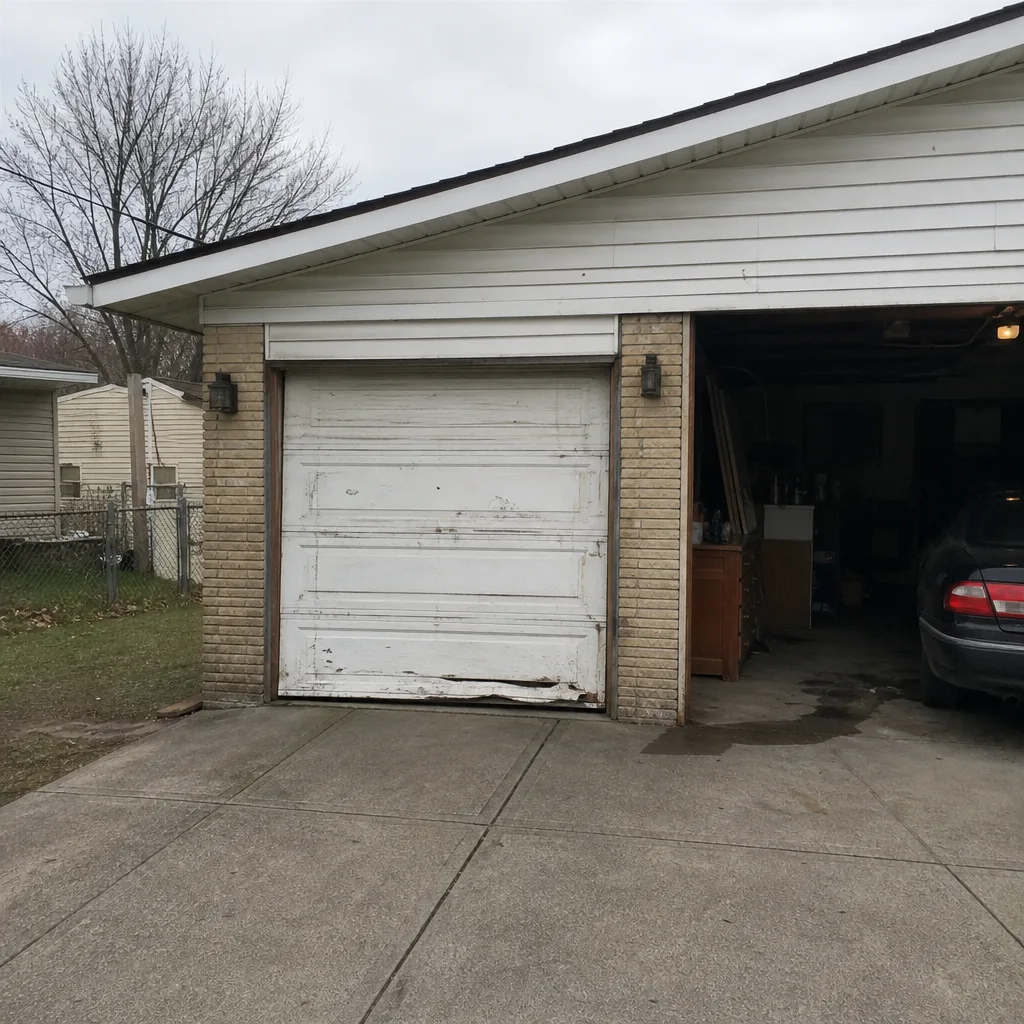 Before
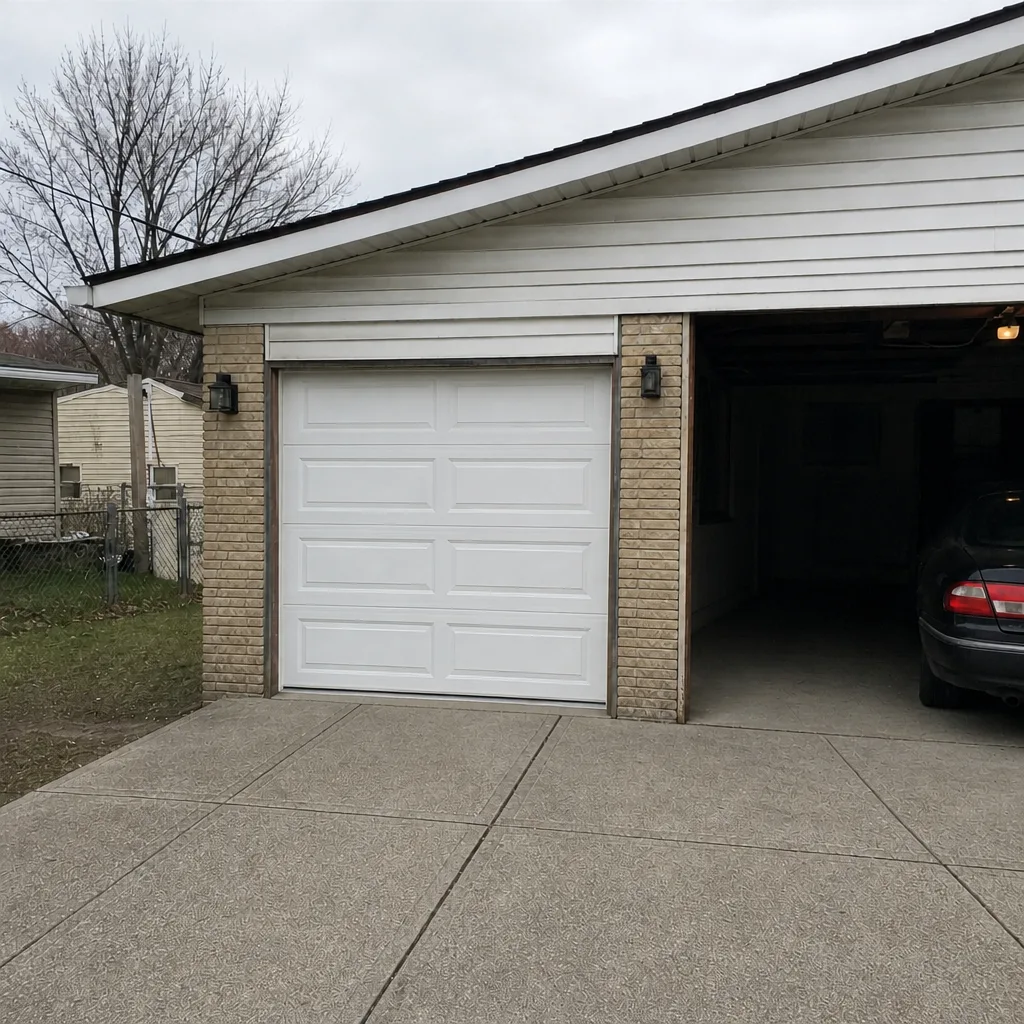 After
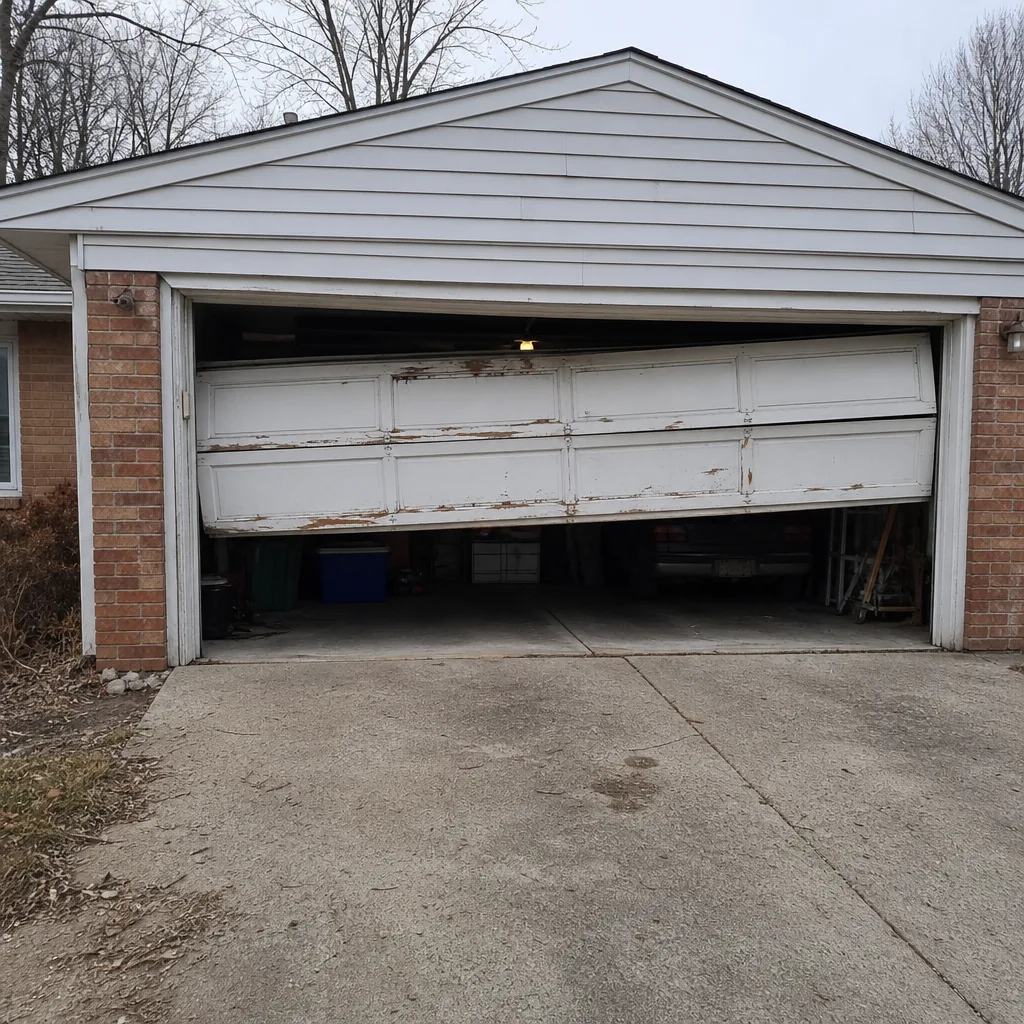 Before
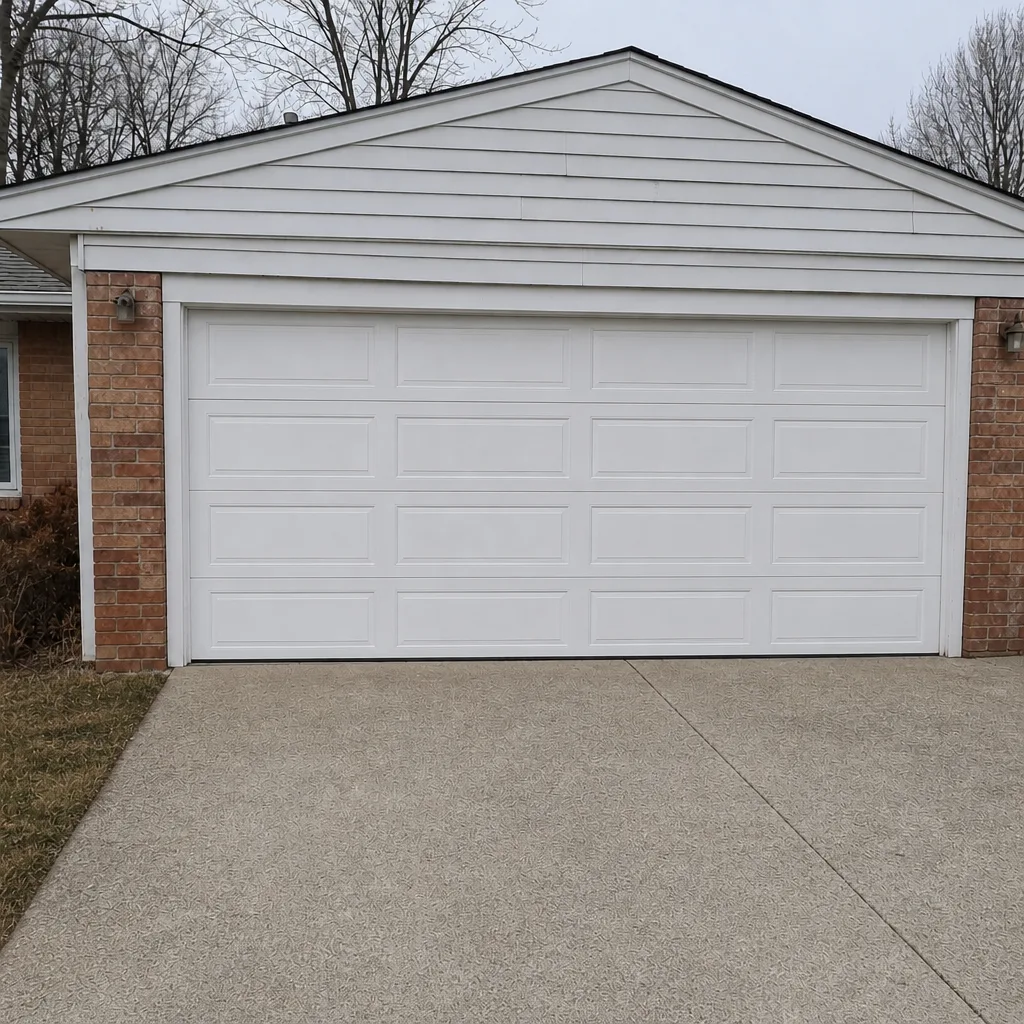 After
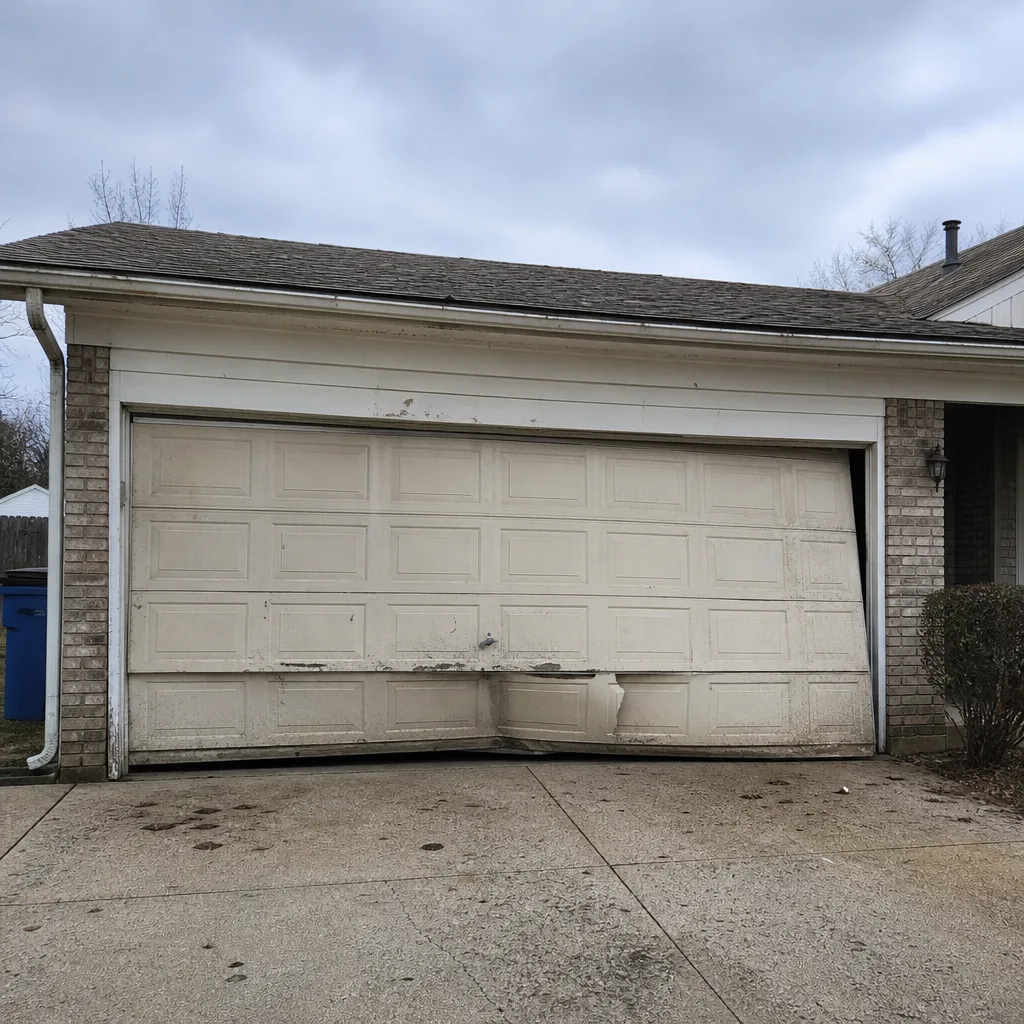 Before
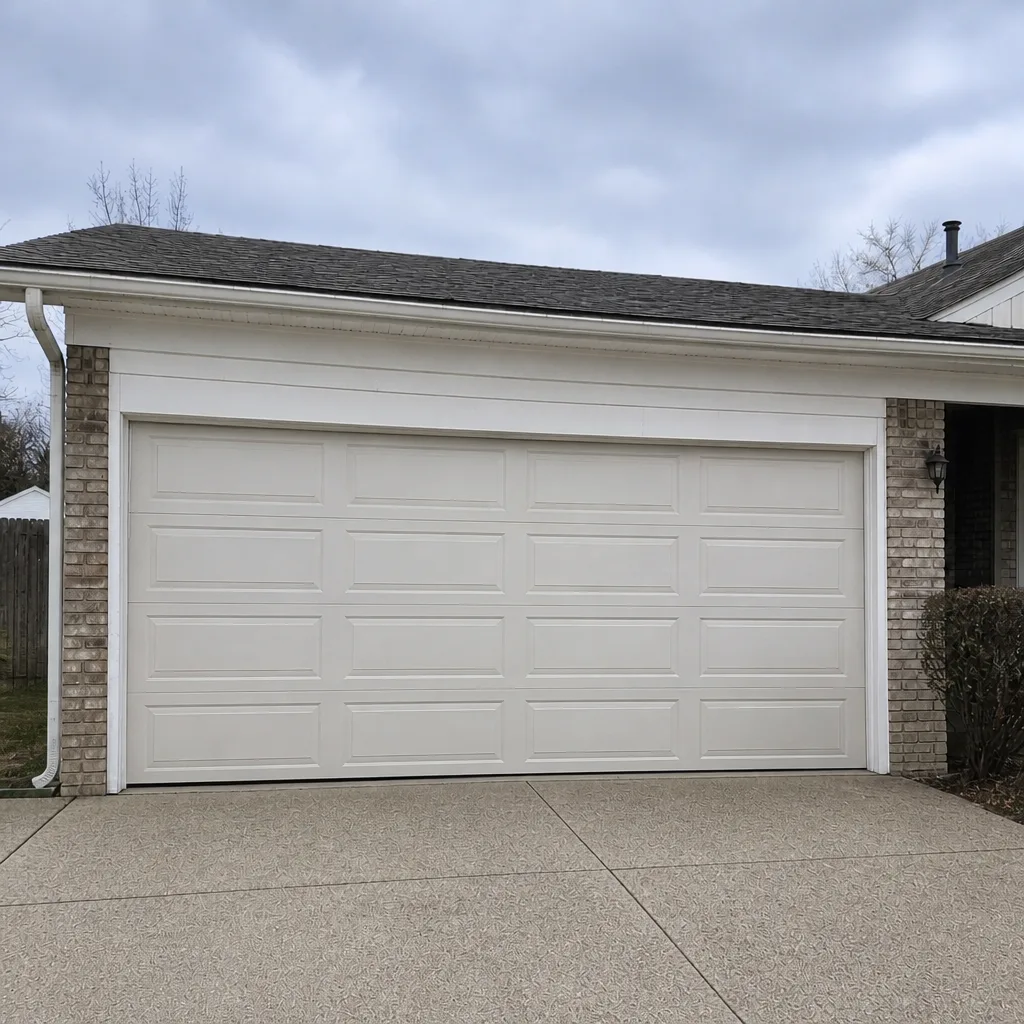 After
When to Call a Professional
Some garage door issues are safe to check yourself, and some aren’t. Call a professional when a spring has snapped or looks deformed, when a cable is frayed or off its drum, when the door hangs crooked or drops suddenly, or when the opener runs but the door doesn’t move. Those are signs of a load-bearing or drive-system failure where the risk of injury or further damage is real. Also call if the door won’t reverse when you test the safety sensors, since that’s a safety issue rather than a convenience one. For a door that’s just noisy or slightly off, a routine service visit handles it. Garage Door Repair Westgate offers free estimates in Westgate – call (844) 263-6149 and we’ll tell you what’s actually wrong before anyone touches the door.
Frequently Asked Questions
A broken torsion spring usually shows a visible gap in the coil, and the door becomes extremely heavy to lift by hand or won’t open at all with the opener. You may also hear a loud bang from the garage when it snaps. If you suspect a broken spring, stop using the door and call a professional, since spring replacement is a safety-critical job that shouldn’t be attempted without the right tooling.
If the opener motor runs but the door stays put, the likely causes are a broken spring, a disconnected or frayed cable, or a drive system that’s come loose. The opener is trying to lift a door it can no longer move, which usually points to the door system rather than the opener itself. A technician can confirm the cause quickly.
Once a year is the practical baseline for Westgate homes, ideally in the fall before Ohio’s freeze-thaw cycle sets in. Fall is when tired springs and stiffening seals are cheapest to catch, and it’s when a door that’s been fine all summer tends to reveal its warning signs. Homes with older doors from the 1970s or 1990s benefit most from the routine.
Springs are almost always replaced as a matched pair, because when one fails the other is typically at the same point of wear and will follow soon after. Replacing them together costs about twice a single spring but avoids a second breakdown shortly after the first. A technician will confirm whether your setup calls for a pair.
We service equipment from eight major manufacturers, including Clopay, Amarr, Wayne Dalton, LiftMaster, Chamberlain, Genie, Craftsman, and Raynor. Working across those brand lines means faster diagnosis and fewer parts delays than a shop that stocks only one or two. If you’re not sure what you have, the model plate on the opener and the label on the door will tell you.
It depends on the door’s condition and how many components are failing at once. A single repair on a structurally sound door usually makes sense, while a door from the 1970s or 1990s with several systems failing together may be nearing replacement. When the accumulated repair cost approaches the price of a new door, replacement is the honest call. Call (844) 263-6149 for a free estimate and an honest recommendation either way.
The Bottom Line
Your garage door is a system of eight interdependent parts, and the whole point of understanding it is to make better decisions. In Westgate, that means recognizing that the postwar and 1970s-to-1990s housing stock produces predictable door types and brand mixes, that Ohio’s freeze-thaw cycle hits springs and bottom seals hardest, and that a fall inspection is the cheapest insurance against a cold-morning breakdown. When something does fail, diagnose the system rather than the symptom, keep the repair-versus-replace threshold in mind, and never touch the springs yourself. One call covers the whole door, from a sensor realignment to a full replacement. For anything on that list, call Garage Door Repair Westgate at (844) 263-6149 for a free estimate, and we’ll give you a written price before any work starts.
Written by the team at Garage Door Repair Westgate.